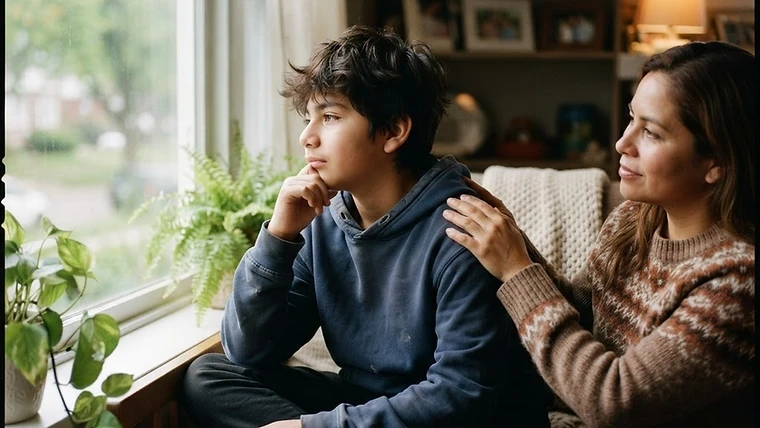
Anxiety is one of the most common mental health challenges adolescents face. The good news? Parents are in a powerful position to help.
Why your response matters
When your teen opens up about worry, your first reaction sets the tone. Dismissing it ("There's nothing to worry about") or rushing to fix it can shut the conversation down. What pre-teens and teens need most is to feel heard and understood.
Start with validation
Before offering solutions, acknowledge what your child is feeling. Try:
- ●"That sounds really hard. Thank you for telling me."
- ●"It makes sense that you'd feel that way."
- ●"I'm here, and we can figure this out together."
Ask, don't assume
Instead of guessing what's wrong, get curious:
"What's been on your mind lately?"
Open questions invite your teen to share at their own pace. Follow their lead rather than pushing for details.
Offer calm, not solutions
Anxiety feeds on urgency. When you stay calm, your teen's nervous system can settle too. Offer presence before advice — sometimes a quiet moment together is more regulating than any words.
When to seek professional help
If anxiety is interfering with sleep, school, friendships, or daily life for more than a couple of weeks, it's time to bring in a professional. Early support changes outcomes.
You don't need to have all the answers. You just need to be a steady, listening presence. That alone is powerful medicine.